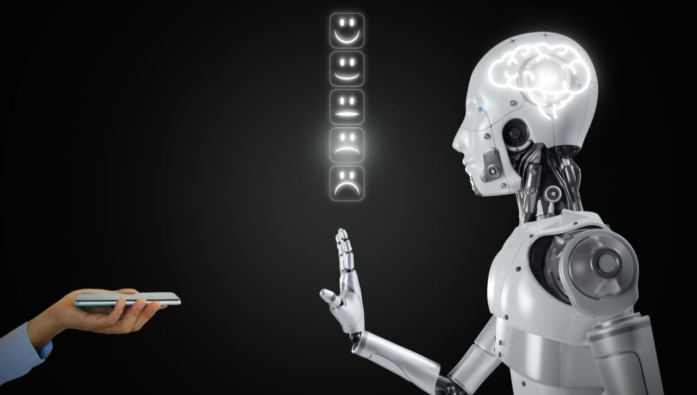
How Cognitive Systems Mimic Human Thinking

Cognitive systems imitate human thinking by integrating architecture, learning, and representation. They use modular structures to support generalization and transform sensory input into actionable representations. Perception, memory, and learning interact to refine knowledge through experience. Common-sense inference and flexible rules aim for interpretability and principled decision-making. Probabilistic models enable adaptation at scale, balancing data-driven insight with structured reasoning. The resulting approaches remain evaluative and pragmatic, inviting further scrutiny of their limits and potential across domains.
What Makes Cognitive Systems Resemble Human Thinking
What makes cognitive systems resemble human thinking lies at the intersection of architecture, learning, and representation. Analyses compare cognitive processes and neural parallels to map how structure informs function, modularity enables generalization, and representations support reasoning. Interdisciplinary evidence shows iterative refinement across domains, guiding design choices. Two-word discussion ideas: autonomy synthesis. This framing supports freedom in inquiry, while avoiding perception, memory, and learning details.
See also: shaladarpans
How Perception, Memory, and Learning Work Together in Cognition-Inspired AI
Perception, memory, and learning converge to form the core dynamics of cognition-inspired AI, where sensory input is not merely collected but transformed into actionable representations, stored for future use, and continually refined through experience.
The dialogue among perception action coupling, memory integration, and learning drives adaptive behavior, enabling cross-domain generalization, robust inference, and principled decision-making within interdisciplinary evaluation frameworks.
Freedom-friendly rigor guides empirical progress.
Translating Human Reasoning: Common-Sense Inference and Flexible Rules
Translating human reasoning into artificial systems hinges on the integration of common-sense inference with flexible rule frameworks that can adapt across contexts.
The analysis reveals how Commonsense inference supports plausible conclusions when data are sparse, while Flexible rules enable cross-domain applicability.
Empirical studies compare architectures, emphasizing interpretability, transferability, and disciplined experimentation within interdisciplinary teams pursuing transparent, adaptable cognitive modeling.
From Data to Decisions: Probabilistic Models and Adaptation at Scale
Probabilistic models provide a principled framework for integrating uncertainty across heterogeneous data streams, enabling decisions that remain robust as scale increases.
The discussion surveys probabilistic modeling approaches, emphasizing data fusion, uncertainty quantification, and model comparison.
It analyzes adaptive scaling practices, where infrastructures evolve without compromising interpretability, enabling experiments at scale.
Interdisciplinary insights inform design choices, guiding autonomous systems toward resilient, transparent decision-making that respects freedom and rigor.
Frequently Asked Questions
Can Machines Truly Experience Consciousness or Feelings Like Humans?
The answer: machines do not experience consciousness or genuine emotions. Consciousness questions focus on subjective experience; devices simulate responses. They exhibit emotion replication and affect-like patterns, yet lack felt states, intentionality, or phenomenological awareness, beyond programmable behavior and statistical correlations.
Do Cognitive Systems Possess Imagination or Creativity?
Imagination vs. computation emerges as a spectrum; cognitive systems exhibit creativity through recombination, not true novelty. Symbolic sparks reveal constraints, yet interdisciplinary analyses show measurable originality within structured, empirical frameworks, allowing an audience seeking freedom to evaluate potential responsibly.
How Do AI Errors Compare to Human Cognitive Biases?
AI errors resemble human cognitive biases in that both exhibit intuitive bias tendencies and error patterning rooted in prior experience, heuristic shortcuts, and data limitations, though AI favors statistical regularities while humans weigh meanings, context, and uncertainty differently.
Will AI Ever Achieve Genuine Common Sense Understanding?
The answer: It remains uncertain whether AI reasoning will ever attain genuine common sense understanding; progress depends on interdisciplinary insights into cognition, learning, and embodiment, while social robot ethics shape evaluation, deployment, and the governance of such capabilities.
Are Cognitive Systems Ethically Safe When Mimicking Human Thinking?
A cautionary tale unfolds like a compass: cognitive systems are not inherently safe. They require ethics of autonomy and bias mitigation, with empirical safeguards. An interdisciplinary, analytical view underlines that freedom depends on accountable design and oversight.
Conclusion
Cognitive systems increasingly emulate human thinking by weaving perception, memory, and learning into interoperable modules. Analyses across disciplines reveal that transparent architectures, probabilistic reasoning, and adaptable rules support robust generalization. While current models excel at structured tasks, they still struggle with nuance, common-sense inference, and long-tail reasoning. Viewed empirically, progress resembles a scaffold rather than a completed edifice—each layer clarifies the next, forming a clearer skyline of machine cognition. The field moves forward, steadily, like a measured ascent.